.png)
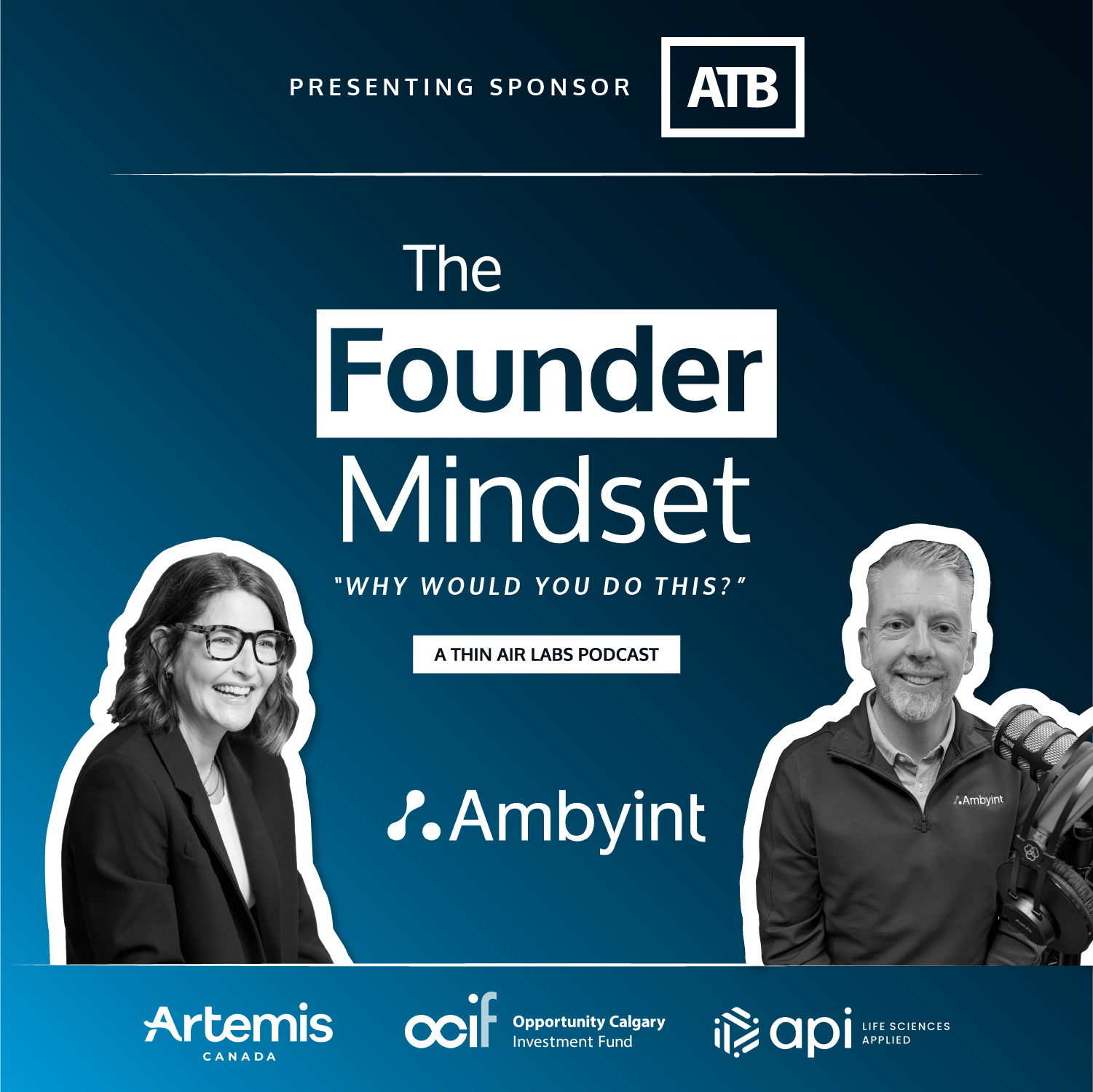
Benjamin 00:02
So I grew up in a household of teachers, and so I always thought I was gonna end up trying to be an educator, really, just to work with cool kids and help them on their journey. And then I found out what that made. And I was a product of growing up in the 90s in the UK, and so things like money do come into the conversation quite a lot. So I picked a different path. But when I think about Ambyint, you know, yes, it's a venture capital bank. So a lot of the conversation is geared towards the financials. And we will have a successful financial run here. I know we will. But what I think about more is we've got an opportunity to build the company the right way, and I've worked in many, so I've got a view on that. I'm very lucky. Dr Ferdinand Hingerl, my CTO, he's come out of academia. He's a wonderful guy, just a real human character. We spend a lot of time talking about how we're going to build this company in a way that we can look back and say we did it the right way.
Leah 00:49
Hello and welcome to Season Three of The Founder Mindset brought to you by ATB. I'm your host, Leah Sarich, and I'm delighted to be back for another season of talking to Founders about what it's really like to build a company from that first big idea. If you've listened to previous episodes, you know, I was a journalist for over 20 years, so I'm more curious about why anyone would ever want to become an entrepreneur, not so much about the business model, product, market fit and so on. I want to understand why entrepreneurs keep going, why they think they're the ones to solve a massive problem, and why they want to make a real impact in the world. And if you're here, I bet you want to know why, too. Let's find out.
Joining me today in studio is Benjamin Kemp, CEO of Ambyint, an AI-powered production optimization platform, accelerating the oil and gas sector's progress towards a more sustainable future. Benjamin, thank you so much for being here.
Benjamin 01:43
Thanks, Leah. I know it's taken us a while to figure this out. You've been very patient.
Leah 01:47
I’ve been very patient, but I'm so glad you can join us. So this is so fun, so fun. Well, you know, most of the Founders that I have sitting in this chair are the Founders of the company. In your case, every once in a while, we actually talk to a venture builder who didn't found the company, but came in to fix it, but has this Founder mindset, and that's why you're here today. So thank you for being here, but I need to get to this… like, how did you even get into entrepreneurship? Because I was doing a little research, Benjamin, you know, as I do, and you've worked with all the big global technology leaders like Xerox and Oracle and IBM. So how did you get into entrepreneurship?
Benjamin 02:21
So I started a small family-run company in the UK. So… privately owned was highly effective org. So I love what they did. When I came to Canada, though, I was like, right? I'm going to reinvent myself. And so went after the big corporate stuff. Enjoyed tech, but I've only ever enjoyed Tech because it helps people work smarter, and so it wasn't like the bits and bytes that got me excited. It’s always been on the outcome side of the conversation. And when I was at Xerox, I loved all the Lean Six Sigma work that they did, and I thought that was exceptional. So my business acumen really grew. But what I was finding was, you know, my biggest job I had in the big tech world, I was a global guy for Oracle, which, you know, when I got the job, I was like, Oh, look at me, but, you know, on a good day, Oracle was great, but on a bad day, you were just a cog in the wheel, right? And I really started to feel that, because I've always considered myself a bit of a change agent, and so this idea that I'm in a company, that if, even if I had an exceptional day, some people wouldn't even know, it just eventually started to compound for me, right? And with all the experience I had, I wanted to put it to use all the time, not just parts of my day. And so then I pivoted and went smaller and much more entrepreneurial. So I worked with a family owned company, with an owner that was exceptional, but she was quite open. She's like, I know my way around the market. I know everybody in the market, but I don’t know how to monetize that, and they could really do with someone that can take us the next level. And what was crazy about that is that's actually… of all the deals I've ever done in that firm was the time I did my biggest ever deal. So smallest firm I've ever worked for wrote the biggest ever deal that I ever done for the company. I had a big portfolio. I really enjoyed it. She gave me tons of latitude, but she was like a die hard entrepreneur, and really just kind of knew one environment, one thing, right, and one of the biggest compliments she ever gave me... So we parted ways in the end, and for the right reasons, but when we parted ways, she wrote me a beautiful card, and she said, You made me a better CEO of the company I was at, and you challenged me more than anybody. And so, you know, once I'd done that, I was like, I want to keep doing that. And I actually landed up having my own shot for a while. I'm a late stage dad. And so as soon as we found out we had a viable pregnancy, my wife's like, look, you know, all this consulting and all this fun stuff you're doing—that comes to an end, you gotta go get a real job again. And I was like, okay, okay, so, and I was actually working for a energy company by the form of Husky Energy at the time, and I that's where I got to see Ambyint, and I was intrigued about their offering, and I was like, I want to get involved in that.
Leah 04:57
Cool I love this for you. So you really got to the point where you figured out what it is that you love to do and what is unique to you in terms of what you can offer companies as they build, which is really, really cool. But you said, you mentioned this, that you sort of like working with these sort of high performance teams, and you call yourself this change agent, and that kind of thing. That sounds a little bit intense to me.
Benjamin 05:16
Well, if you spend time really, alright, but intense… my team literally, like, don't let him have any coffee, and I've got a cup of coffee in my hand, but that's just to keep me going through this. No, look, you know, I'm really into what I do, and so I'm a bit older now, so as I look back, I go, Holy Moly, I feel, you know, one of the my first ever corporate HR person is a very dear friend of mine by name of Shelly Ralston, and she's a senior chief HR officer in town with a big company, and I met her way too often in my first year at Xerox, for all the wrong reasons. She's like, it don't work like that here. But you know, I'm all in, so you know, you can't get half of it. Yeah, the thing for me is I'm really people first, people centric. And so yes, I can do tough love and those things to help people grow, but I really enjoy being around people and helping them. And so you can take all that intensity when you really peel it back, the intentional value is really high, typically, but I have my moments. Everybody else…
Leah 06:27
Don't we all exactly. So, right. So you're doing this work, and then you end up at Ambyint so tell me how that happened. Like, how did you even decide to take on this challenge?
Benjamin 06:35
Well, I took a massive flyer, so once I got my head around, I need to go get a job, because having my own company was fun, but it came in peaks and valleys, you know, ebbs and flows. So the two things were, I was working for a producer, and saw Ambyint’s value, so I could see it from the customer side, which is a real big tell. You don't often get to see that when you go to work for someone, you're often looking at what they tell you it is, whereas getting it from the customer's perspective, but look, if I had an ego, I wouldn't have gone to Ambyint. You know, I'd done jobs that were massive before that relative to that job, sure. And so when I went there, I knocked on the door and said, Hey, I want to be part of this and they were like, Okay, well, come in and help us in Canada. And I'm like, Sure. And I was only less than a week, and then we saw material changes in the company. Oh, and so the timing was really bizarre, so I told my wife, because at the time, I had a few offers on the table, two of them would take me back to big corporate tech jobs, right? And I was like, I don't want to do that, but I will if I have to, because we'd worked really hard to create a family, and that was the most important thing for me. So what I got to do is less important than supporting that. But I was like, well, I'll get… days in, we get a call there’s been a board shuffle… the board had created a shuffle of the management team and all this stuff… See, I told you, should have gone there, and I went, it's gonna be fine. It's gonna be fine. And it's kind of been like that ever since. And so whilst I'm back in an employee position and a partial ownership position, it's not been the stability of my old corporate world.
Leah 08:11
Okay, well, let's just do a 101 on Ambyint. So tell me a little bit about what the company is and what they do.
Benjamin 08:18
Yeah, so the company, in my mind, it's really, really cool, what they do. So when you strip it all back, and you know, you'll hear all these different buzz words that you hear with tech, and we're the worst in tech for buzzy words and sort of getting people hyped about that. But at the end of the day, when you're a producer, once you have drilled a well and it's no longer free flowing, it becomes a job to go and get the yield from that well. The passion for producers is often on getting those wells that they hit lucky with. So that's the drilling and completion side. So that's where a lot of the focus is, right? Once it's into sort of a yield position, it's really in a decline. Now, some of these can go for 50 years, but it's really on a decline curve. So the attention of the company as you go through that decline curves gets lower and lower, right? And the priority is always to the highest yield. And so what that means is you've got, across North America, you've got a million wells have got lift systems on them. They're in that decline stage, and they're getting less and less attention over time, and Ambyint has figured out how to control those wells with no human in the loop using a combination of physics models and, you know, machine learning and AI Artificial Intelligent methods using pattern recognition, all these things. So we're actually controlling well heads over ten and a half thousand wells right now with no human in the loop.
Leah 09:36
With no humans.That's amazing. It's pretty cool. No wonder you like that.
Benjamin 09:41
Yeah, and look, we get put in this bucket of, you know, data and analytics surveillance and all this sort of anomaly detection, which is cool, and lots of people do that. Our claim to fame, though, is this true autonomous control that we've created, and that's kind of our spearhead, and we're the only ones doing that right now at scale and we're doing that right here in Calgary, which is pretty cool.
Leah 10:03
It's so cool. I love this. So tell me a little bit about what it was actually like, though, to come into this company. You kind of glossed over it. I'm a little bit curious about what that actually looks like when you come in from the outside and have to do this thing, like as the CEO.
Benjamin 10:18
Yeah. So look when they called me when the board called me and said it was actually the CFO. At the time, they drafted in a CFO to kind of get it all tuned up, and he'd come from oil and gas, but he hadn't necessarily worked in smaller environments. So imagine you're a CFO. You make a two point adjustment on a big spreadsheet gives you a big number, right? In a small environment, it doesn't work like that. You start thinking about, Okay, what have I got to stop doing? And that might be, you know, sorry to be screwed, but you might be cutting off a limb here to make it all work, and so he was struggling, and I was working with him through that. And he was like, You got a lot of know-how, on how companies need to go and get successful, and how you turn that into that. And so he actually went to the board and said, I'm not equipped to run this thing. I don't want to run the thing. I think, Benjamin… I don't know if you know what you hired in Canada, but this guy can get it done for us. Well, when the board came knocking, my first reaction was, like, easy, I gotta get this through at home. Yeah, I don't think we're signed off. So I was a bit reluctant at first. And I actually went to my mentor and coach, a lifelong friend, and said, Hey, what do you think? And he's like, buddy, what are you doing? Like, get to it. But you do. When you come out of those different environments, you start to think about the bigger picture. Yeah. You go, okay, so this will be my first formal CEO title, and it's probably going to be the shortest job I've ever had. And so why would I sign up for that, then, when I looked at it, I felt like, in my mind, the 25 years I've been at this, I had a playbook in my mind that I could apply, right? So why wouldn't I go for it and forget about the consequences or whatever that might look yeah, because also the other thing is, I kind of picked that I wasn't really the corporate guy, right, right? I mean, it may reappear in my career, but at this time, it hasn't been on the cards for me. So, but it's outright stressful, right? Yeah, well, on and, you know, and then once I sort of committed, all the stuff comes out, right? So when you're, you know, a junior exec on the team that's new, you don't get all the goodies. When you're in, they show you everything. You're like, Oh, I could have done with knowing that before I agreed. But we went to work and we didn't waste a second… like we were 15 minutes into the job, I'd made adjustments in the company, because you got to go quicker as it gets away from you.
Leah 12:30
No kidding, but what's that like to just… I mean, where do you even get the confidence to come in and go, Okay, I see it. We need to make this change. It's been 15 minutes. Here we go.
Benjamin 12:38
Well, because you've got a playbook in your mind, and it's all based on intuition. Yes, you've got data, but you've got to go with your gut, right, especially when your back's against the wall, sure, right? Like, you don't really have a lot of time. So funny side. So I drive in with my wife, right? Yeah, and we go in, commute to work together, and she's like, So what's on your plate for today? And I'd go through it, and she'd look at me, like, Well, how do you know, what the hell are you gonna do? And I'm like, I don't, I don't. And so after about two weeks of this, I was like, hey, you know what? We can't do this in the car in the mornings. I'm like, why? I'm like, I'm a fairly confident guy. You are killing my confidence because you are recognized. She's a nurse by trade. Oh, so, you know, you study, then you practice, then you apply. And so she's all like, how are you knowing these moves to make, given that there's no study, you know, whatever, I'm like, Well, it's business, and this is the entrepreneurial bit, right? But where I'm a slightly bit different is I've got frameworks that have been instilled in me for 25 years, so when I'm operating with instinct, I'm putting against a framework, right? So for example, one of my big ones is, think no proof, right? So which bucket are we in? Oh, so a lot of entrepreneurs, when you talk to them, I think, I think, I feel, I think, I think, I think… what do you know? And what can you prove? And so for me, that's my decision tree, and you're not always going to have data to prove it. Sometimes you in that kind of, know, so you've got some data, but it's not necessarily hard coded data, so you kind of like, got these… but when you're making decisions, my decision tree is in my think, no… approve, and that allows me to go, am I secure in my thinking? Or am I going to take a flyer on this one? Because I'm not at that stage, and what do I need to do to get to that stage, and do we have the luxury time to get there? So it's sort of this constant working framework in the background that's cool, whereas a lot of entrepreneurs haven't had the luxury, right? They don't know this, yeah, so they've got nothing to kind of pin it back to. And so which is why I got heavily involved in VMSA here locally, yeah, working with a couple of CEOs, and that's because, for me, I'm passionate about ensuring they're entirely successful. And for them, a lot of times it's… you've got the spirit, you've clearly got the tenacity to go out there and make it happen, and believe now you got to back it up with some stuff. And so most of my stuff is steering them towards some frameworks that can start to allow them to think clearly, especially as they scale their companies. Because in the early days you can kind of wing it, but there's a point at which winging has kind of gone out the window, especially if you Bench Capital Bank, because, you know, you got a board… against those things. You know, it gets intense.
Leah 15:09
They're lucky to have you sharing your wisdom and experience. Oh, that's awesome. Okay, so we've got Ambyint. You're going for it. So when did the company launch?
Benjamin 15:19
Well, again, it's not an easy story. None of this, right? Clean. It's not clean, yeah, so sometimes I'll get a call from a potential investor say, Hey, I see you've been going since 2000 or whatever. I'm like… So Ambyint was born out of another company. So it was a company called pump. Well, okay, they had a theory and belief Ambyint showed up, bought them out, and Ambyint was created nine years ago. Okay, so born nine years ago. I joined five years ago. So I'm sort of halfway into their journey.
Leah 15:44
… into the journey. And how many employees do you have roughly now?
Benjamin 15:47
Right now we're at 62. We scaled up quite a bit. We secured a grant in partnership within our labs, right with missions reduction Alberta, yes, and it's a really, really interesting thesis behind that grant, but that allowed us to hire incremental heads associated with that that we wouldn't have been able to hire under our own means.
Leah 16:08
So, and that was a pretty massive grant, if I'm not mistaken?
Benjamin 16:12
For us, it was, yeah, I mean, then generally, got a lot of press, so yeah, it's 4.1 million Canadian over two years and it's allowed us to add an incremental 11 heads into the business. Oh, wow. For a company of our size, that's significant, significant. Yeah, I have to tell you, I'm proud as punch of the team. So we have to do it quickly. So we knew, you know, when the grants potentially coming, you got to be ready to go. But you can't, obviously, go until you got the green light. But we managed to secure 11 heads, and I think it took us nine weeks in total. And I can't tell you, the quality of talent has come through the door.
Leah 16:42
Wow. Nine weeks. Yeah, 11 people. Yeah. That seems nuts to me. Yeah, it was fun. I love how your eyebrows shoot off the top of your head.
Benjamin 16:51
I love the people recruitment side of it. It's I really enjoy all that.
Leah 16:55
Oh, that's amazing. That's incredible. But as we know, of course, with the evolution of every company, whether it's a small one, or even these big enterprise operations, there's a moment that feels a little bit like a do-or-die moment that's really pivotal. That's the go or no-go moment. Can you sort of reflect on one of those stories for me.
Benjamin 17:12
Yeah, I've got a lot, so I'll narrow it down to the one. I think the big one for me was. So just to give you a bit of context, when, when I joined about a year and a half before that, they closed the round of money that was led by all American investors. And so given its value prop and where it was going, directionally looked real hot, right? Ambyint was a hot name in the market. Looked hot. And so it was moved from a Canadian company to a US company. Primary driver is there's lots of tax advantages for US investors, if it's US company. So I knew of Ambyint, and I'm like, you've moved. What a shame, right? What a great story here locally shame to see it leave. So when I took over, one of my goals was to bring it back. You remember that song? So I used to play that in my head a lot, but I was like, the timing just is not right. However you get to 2023, so I've, you know, I've taken over. We've created some stability. We've sort of got through the survival stuff. Now we're into rebuilding foundationally, and I wanted to bring it back. And so we did. It. Cost us seven months, a ton of capital to do it, and not capital that people could be like, Oh, that makes sense to do so. And it was all on the basis that we able to do a couple of things. One is we'd be able to raise incremental capital. And the second thing was, in that capital raise, that it'd be more Canadian focused, which would allow us to recertify as Canadian company, because there are really progressive programs in Canada you just don't see in the US. So one of those is, you know, often people will hear about these SR&ED programs, right, which is real and and credit based tax offsets relative to your R and D work in a company which is really important for a scaling tech company like ours… wouldn't have been able to do that in the US. Can do it in Canada. And then the other piece was non diluted capital. So we see much more progressive programs on non diluted capital in Canada than we do in the US, but it was a big bet. So the board is saying, hang on a second, you barely got any cash to deal with. You know, we're up against the wall here, and you want to spend more money to bring it back. And so we tied it to a capital raise, and that's where we were lucky enough to partner up with BDC on the venture capital side, and a chap called Juan Benitez, who's now my independent board chair. And Juan's a great guy, really lucky to get to work with him. He's a really good human he's been in the oil and gas sector and exited his own company. So his experience is first hand experience. He's hyper networked, and he really cares. So he was all like pro Ambyint. And so he helped us with BDC. But you know, they can't invest unless you're Canadian. So now I got a chicken and egg. I need that money to fund bringing it back. They need me to know that it's coming back to give me the money. And so this is a bit do-and-die. So 2023, was like, big time. And bringing it back. If you talk to any of your community, you know, never leave, if you ever think you'll bring it back, because it's, it is a nightmare. You have to pass this anti-inversion law. It's pretty full on. So we had, you know, we have a consulting partner that does this. I mean, they said this is a super complex transaction. Paul, my guy over at Macmillan, the law firm here locally, is, like, I've seen more complex IPO deals than this thing. So, you have to restructure the company. And you know, we're just trying to get a go here, right? So me and my Chief Commercial Officer, who was heavily involved in this transaction, is like, What are we doing? Like, we got to sell stuff, we got to grow, and we're spending money over here, is this going to work? And so we were all kind of questioning it, but I believed it was the right decision, not only for the company, but also for the ecosystem, to have Ambyint leave and not be part of its origins and where it's from, and the success we're going to see. I just felt like it'd be a real gap if we didn't do that. So we pulled that off. And so vindication one is BDC have put two rounds of money into Ambyint and then secondly, we were able to secure that non diluted grant of a good size with ERA, Justin Riemer and his crew. So, you know, it all made sense in the end, but at the time, yeah, there were many tough calls where they're like, What are you doing over there? Like, what are you doing?
Leah 21:18
Okay, so what does that feel like?
Benjamin 21:21
Awful. What do you think it feels like? I mean, you gotta like, you've got both sides going, right? You've got the two shoulders talking to each other, and you're in the middle going, and so this is again, think no proof, right? And so I'm living in the… I know this is the right decision. I can't prove it right now. And so that was the ticker, but you look back now and it's all vindicated. Loving it, but we didn't know that at the time, and it wasn't blind faith we were doing it with. We could see a path, but it was going to take a while to get it done, and you weren't going to be able to go bring it back that day, and then it's all vindicated right away. So it's about a, you know, we did that in mid ‘23 and really only vindicated starting this year. So it's sort of like, you know, you got to have a bit of patience on that.
Leah 22:04
Okay, see, now that just gives me anxiety thinking about it. Honestly. I honestly can't even imagine what that would be like, because you're really so, I mean, I think you would call it a calculated risk to a certain extent, like you could see the path, but you to your point, you're answering to the board, and they're saying, What are you doing? And you've got to say, Yeah, we just got to do it. You just, you got to trust me on this.
Benjamin 22:26
Well. And then, you know, when we did bring it back, we did a bit of a shout out in the community and everything else. And then there was a, you know, and we got lots of really good PR around it, which was good, but one piece of PR that I didn't enjoy was… why on earth… like in the public domain, why on earth have you done that? Everyone else is going the other way. What are you doing? Really? That's what you wanted to ride up so we'll see and look that pressure doesn't go away. Because ultimately, my sector is oil and gas, and as you know, we've got a really healthy and high potential oil and gas opportunity in Canada, but it doesn't even come close to the size of the opportunity in the US. So this is a very US dominant sector, and so if we were ever to be sort of acquired, it's probably a US buyer buying us. So we will deal with this again in our future, but for now, it felt right to me and felt like the thing to do. And yes, it was contentious, but really happy with the way we kind of stayed strong to what we saw and got it done.
Leah 23:24
So what have you learned moving through that experience about yourself as a venture builder?
Benjamin 23:30
I think the two things are… the point in time decisions you make, you really have to plot them somehow, what seems like… yet we're making that decision at the moment. And look, I have total respect for the guys that had to make that decision previously, it was actually tied to some of the investments, the… money to run the company. Those are the moves you've got to make. But I think it's just being more thoughtful about the decision you make today. It's okay to make that decision, but make sure you've really run it through its ten moves. What does that look like on the right side? What's that look like on the wrong side? And how could this come back to bite me later down the road? I think that's, I've always been three moves ahead. Yeah, this feels like a ten move ahead. And I think that was the learning for me. It was like, as you make these decisions… and when you're in sort of that fight or flight mode, it's sort of like, what's right in front of you, just make that decision, go and move on. And move on. Don't look back. But on some of them, if they're big, you've really got to… excuse me, think that through.
Leah 24:31
The Founder Mindset is brought to you by ATB financial. In the fast paced world of tech, your banking needs evolve as quickly as your industry. Whether you're just starting out or aiming to reach new heights. ATB financial is dedicated to supporting tech companies every step of the way. Partner with ATB financial for a banking solution that grows with your business. Okay? So moving on from that now, of course, in the background of all of that decision making and the move. It's your family, yeah. So I mean, how does that happen? How does being the CEO of Ambyint affect you and your personal life?
Benjamin 25:06
Yes. So I've been very fortunate. My significant other, my wife, has always said, when we have a big decision, I believe in you, you have to make the right call for you, and I'll back you 100%. So I've been very lucky that way, I didn't know that when I proposed to her, because we were quite young, and so we didn't ask all the questions that people ask now—what are your life goals, and how are we going to behave with each other? And all that we were just in love and we might, we're going to make it work. So, we've lucked out with that, and I think that, you know, it's an interesting dynamic, because at my age, you know, in the corporate world, a lot of people like this is your prime time, right? Big earning years say you make your retirement work and all that. And I'm rolling the dice a bit more than I did in that world, sure. So that's a different dynamic, and that's one I try and keep to myself so that I'm not loading up on the family there. But my wife's been at every stage of what we're doing, so she knows. And we talk about work a lot. We talk about what's going right, what's going wrong, but I think, you know, all in all, it's gone reasonably well. There's just been a couple of times where it got, like, the look in the eye, like, what are we doing? And it's only happened a couple of times, sure. So all in all, I think it's but I gotta tell you, if you don't have the right support base. It all falls apart, doesn't it? Yeah, well, because you just wouldn't do it, because something's got to give, right? And so for me, it's, it's sort of trying to balance that around being bold and shooting for the stars, but without necessarily breaking what you've got. And for me, like I told you, you know, we work pretty particularly hard to bring Harper into this world, and so I'm not going to put anything that jeopardizes that right on the line, right? That's just the bigger thing for me.
Leah 26:45
Absolutely, I love to talk about that because, you know, people don't appreciate or understand what's happening for people in the background when they're making these big decisions, and everything is super high stakes, you know, when you're making those business decisions, but you know, also in the background, you know, if you're bringing a little person into the world, and it's not an easy journey that is so profound, it's so hard. How did you negotiate that? If you don't mind me asking.
Benjamin 27:10
We've done it different ways over the years. We've done written documents that says, here's the pros, here's the cons. We both sign it. So if we hit, you know, hit a down cycle on something, or it was a bad decision, we both know, and we've got something to trace against. So that was, that was early on, and now it's more like, what's your risk tolerance, right? And where are you at with this? And, yeah, but look, you know, there was, there was one period that didn't go so well. So we were on a… we'd worked really hard. I felt like we built a better breath in the business so you could breathe. So actually took a family vacation in Europe, met up with my dad and his lady, and I'm like, right? I'm actually gonna have a proper vacation. And I'm a week into the vacation, and I get this call from my finance guy going, Yeah, we got a problem. Totally derailed, like, the vacation. And so that was a really tough one, and even the toughest part, and I promise you, I won't get emotional on the podcast, the toughest part was my dad was, like, I don't like what it is doing to you. Like, I don't like the level of stress and the pressure. And you're a pretty solid guy, like, you can take a lot. I don't like this for you. So now you've got, one of the people I respect the most of my life going I don't think this is healthy for you. And I'm like that this is not unpackable, like, I'm in, yeah, there's no, there's no turning back, like the optionality… doesn't exist for me, I mean, and so, which is why, you know, I think I'm sure a lot of Founders, CEOs, will tell you, you don't get a lot of good feedback, really, especially, you know, if you're sort of going along the stages, because the expectations just keep ramping and ramping. But one of the things my board did say to me, I think it was so I took over. Yeah, it was around 23 they just said, you know, you're the kind of Founder we were looking for, like your behaviors are exactly what we wanted. We wish we got it earlier, was some of the feedback. And so that's one compliment I hold near and dear to my heart. Like, look, the future may be different. We may have different challenges, but for that time, they were like, Yeah, we wish we'd got you a bit earlier, because you could have done more, and so that's something to hang on to. Oh, I hang onto that one for sure.
Leah 29:26
Yeah, absolutely. That's what gets you through the hard days. Yeah, yeah, no kidding. You also talked a little bit about how doing this kind of work changes you, even as a person. And you talked about, I believe the phrase, if I'm not mistaken, was brute force, yeah, and how it's really hardened you. Can you talk a little bit about that?
Benjamin 29:44
Yeah, so look, I'm a fairly happy-go-lucky guy. You get me on the golf course. I'm pretty fun to be with. But yeah, so there are two places to it. So tech, scale, high growth. It's all fun and cool. And some might argue, you know, it's quite a sexy space to be in. But the reality is, if you're going to change the way that your customer works, like fundamentally change them, that's full on change management 101, right? And change management is not easy. And then, so you've got that going on on the customer side, then you're trying to drive industry change, then you're trying to drive company change, and then trying to drive people to change your own shop. You are just dealing with change, stacking left, right and center. And so at some point you have to go, we're going this way. And that's it. And it can feel like brute force. And I don't think people talk about that enough. I think the shiny elements are highlighted all the time, sure, but I've, you know, I've worked with some people, and there's a kinsmanship. It's not because we're sadistic or anything, but those grindy, gritty, crunchy, really hard problems, people that take those on, I naturally want to, you can just see in their eyes and their face and their voice. You know that they dig in, and they dig in real hard, and they're great people, and they may have, you know, blind spots, they may not be perfect all the time, but they dig in real hard. And so I just feel like, when you take a business that had a great idea, it was trending all right, and then it hit some bumps in the road, it really needs a turnaround. But that turnaround was not graceful like… it had to happen that minute, that day, you know, you got to get after it. And so a lot of what those early folks would have felt for me when I was the CEO, straight up brute force, like we're going this way, and I'm betting on it, and we got to do it, you know… yeah, you know, we had a beautiful office up in the northeast of Calgary. It was wonderful, you know, very sort of Silicon Valley-esque you know, there's a badminton court in the middle of the office and business like that. I'm like, we ain't got any of that. We're going back to basics, like, we're stripping this thing down, and then we'll rebuild it. And a lot of people said, I don't want to be part of that. And I'm sure they were probably like, because of you, but that was the situation. Those are the cards I've got, and I can only work with the cards we got, right? So, then you rally around people that can support you around that.
But there are days where you're like, this is just more forceful than I want it to be, and often that's the register, right? When you look back and you go, why is this so hard still, right? And that's… and so what happens is, is you do that repeatedly over time, you just become hard, and I never want to be hard. Like I really do have a soft on the belly, and so I never want to be that tough person, but it does harden you over time and so even things like, you know, when you're interviewing things, you can hear it more now than you ever did before and that situational stuff, you're less likely to give people the benefit of the doubt as you get hardened, which is a shame, as you may walk past someone who's super high potential, they've just had a bouncer, you know, run…. and you've become hardened now, and you're, I can't hear it in their voice, and so it's just something to always check on yourself. I've got to be aware of it, yeah. And I got a really good team around me, and so we're a really diverse the team, and quite different. And so from that perspective, we're always checking and balancing each other. And then, you know, one of the guys has the wonderful task of clearing his voice—I need to give you a bit of feedback. And then I'm like, Okay, let's do it. And as soon as he says it, I'm ready, because he's super honest with me, yeah, and he doesn't like doing it, so I know when he's doing it, he has to do it. It’s a really good tell for me that if he's given me feedback, I've really got to pay attention. And so I try and do that. But yeah, I just, I forewarn people that you know, for all the glitz and glam, it makes sure, you know, can really make it quite tough, which has its own qualities, but also can, you know, if you carry it home, for example, that's not good.
Leah 33:36
Right. Interesting. I like that we have this part of the conversation, because it really dispels some of those romantic ideas of what it looks like to be an entrepreneur and really the underbelly of it can be really challenging, and it's a question of, how do you negotiate that with…
Benjamin 33:51
This is why I got involved in VMSA. So imagine you're a first time entrepreneur. You've got a great idea, yeah, and it all goes wrong, yeah? Well, the glitz and the glamor, oh… you'll do it three times, and you'll get it right. You may actually just say this not for me, right, because you didn't have the support, or you didn't have any kind of structure to work with, and therefore you just quit and go do something else. And then it's… you've got an entrepreneur that was highly capable, but not ready. Oh, they picked the wrong idea. And so that's why I wanted to get involved in VMSA, because the VMSA, they're not, we're not here to make their businesses successful or there to make them successful, right? And I love their sort of this MIT coaching model they have that's really a three point view. So it's not sort of one person coaching, which is a traditional mentor model, is a lot of one on one stuff. This is broader, and I think that's really healthy. Yeah, the teams are really mixed and diverse, and so therefore opinions are different. I really and honestly. You know, most of the folks that are mentors at VMSA will tell you this. We get a lot out of it. So it keeps me honest in my day job, So, I think about that. I'm in my day job Platform Calgary, and I go to that… I'm like, I'm not doing that, I'm not doing that, I'm not doing that. So it keeps you honest about where you are on your journey as a leader as well.
Leah 35:03
Oh that's exciting. So of course, we've talked about the challenges, but now I do want to talk about, what do you love about this work?
Benjamin 35:09
Oh, it's game changing, right? Like, when we meet with customers, and we sell to engineers in oil and gas, so legacy industry and engineers and engineers love them. They're designed to build stuff, right? They're not designed to buy stuff from other people that they didn't build. So there's a natural tendency to say, Well, I didn't build it, so why would I believe in it? So you've got all that… sort of the psychology of it all, which I love, and then you've got a legacy industry that knows it needs a change, but it's still successful on its own. So it's sort of like we'll get there when we need to get there. We have seen some more recent drivers, but I just think, you know, it's a really exciting space to be in. But again, for me you know, one of the things that I realized was, when I was in some of my corporate jobs, I felt like I was doing a bit of checkers. This is chess all the time. That's what's really interesting about it, and it's, I'm not gamifying it, but that's the stimulation, is to be able to convince someone that there's a different way of doing things that's only going to make them shine. And then when we get to the other side of it, that's the bit that really excites me, as you can tell by my eyebrows. So the other side of it is then, when the customer does the playback to us. And so we've had a couple of examples recently. So one customer shared with us the chap we were dealing with. We had multiple stakeholders on a call, and I was actually on the call because I was covering for someone on vacation. And the guy said, I just want to be really clear. I moved to this company so I could work with Ambyint, because with my old employer I couldn't work with Ambyint. And I was like, oh, that's like, think about the richness of that. And then the other one was, you know, a large producer that's a household name, you know, two and a half years ago, basically said we would not let you control our wellheads… You know, sort of over my dead body kind of concept, and now they're like, you would not be able to get that out of my hands, you literally wouldn't be able to get out of my hands. And he walked me through his experience. And what happened was, he kept hearing about Ambyint. One of his colleagues was using it. So he just went by and said, Can you show me what you're doing? And he started showing him. And he went by again. He's like, can you show me more? Can you show me more? Then he got onto the platform, and then he's like, No, there's no way I'm going back now. Wow. So that's like, real change at scale are really exciting. Now, the interesting component is, we do see a difference between the US and the Canadian market in terms of adoption. And I'd really like to see Canada go a bit quicker.
Leah 37:31
Sure. Canada's a little risk averse sometimes, aren't they?
Benjamin 37:35
Yeah, but the irony of that is, they're getting less dollars for the product than they do in the US. Right? And so yes, they all make money. They make profit. But if you think about some of the broader market dynamics right now, I think Canada wants to have a competitive mindset and be pushing all the time. And so what happens is, is I can work with a Canadian customer, and might go a bit slower, and I can work with a US customer, and they're all in right from the get go and so that's just a challenge for us, but we're committed to making sure we can support the Canadian market as much as possible, especially as we're in this time.
Leah 38:08
I love it. I love that. One of the other things we always talk about on this podcast is impact. It's important to us at Thin Air Labs to create meaningful human impact. And I'd love to know how you think about impact and creating impact in the world.
Benjamin 38:19
We've got an opportunity to build the company the right way. And I've worked in many, so I've got a view on that. I'm very lucky. Dr Ferdinand Hingerl, my CTO, he's come out of academia. He's a wonderful guy, just a real human character. And we spend a lot of time talking about how we're going to build this company in a way that we can look back and say we did it the right way. And so for me, it's sort of like… we accept that there's going to be turnover in the company. Not everyone that's with us today will maybe be there at the end, and we get all that. But for us, one of the impact statements is, how do we help them move their journey forward? And so, for example, my first interviews at Ambyint, I don't talk about what we need, what we want. I'm like, where are you trying to get to? Where are you today? Where are you trying to get to? And what do you think you need help to get there with? And I can tell you real quick, if Ambyint can help you or not; it's about them. It's not about us. Yeah.
So, one of the compliments we get because we've obviously had quite a few onboarders, so I've been meeting with them, you know, they're 60/90, days in. How's it going? And the first thing they talk about is the people and the culture, so that… I feel like we're on the right path now as it relates to that. But if we did this, and, you know, a few people in the company made, you know, a load of money and everything else, that wouldn't be a good outcome for us. A good outcome is that people who got to work with Ambyint on our journey talk about it with very high regard, across the people, the culture, the way we work with all our stakeholders, right? That's really important, I think about my relationship with with Thin Air Labs, right? We started out over a year ago. We truly are in partnership. We're expanding the relationship, but it didn't click right away. And, you know, some people go, Oh, well, move on. Move on to the next one. And that's just not how I'm wired. So if there's really good people at both ends and the intentional value is high, we can overcome those problems. And so you invest, as they did, in us, and we did in them, and I'm really happy with where we are today. And so those things are just sort of core to us. I just… this disposability of people and moving on. It's just not me. It's not what I'm about. And so we're trying to build a culture around that. We're customer first. And that's easy for people to say, but I truly am customer centric. I believe in driving the best outcomes for the customer, however hard that might be, and we're seeing that. So you know, one of our largest customers in Canada is a huge fan of what we're doing, and when you ask them, they're like, Ambyint’s just so easy to deal with, because remember, we're in software. Software doesn't always get the best reputation, for being easy, especially where I came from, we were tough cookies, right? I'm like, No, we're here to work with you. If the value is there, it'll go great. If the value is not there, we don't you wasting your time either. And so you get to do these things in a smaller setting, like ours, and with the control we have, you don't always get to do that in the corporate world. And that's a big part of what I enjoy.
Leah 40:59
Which you enjoy, lovely. As we talk about wrapping up this conversation, I always ask the same two questions. So you're building Ambyint, you're writing the story for the company. How do you hope that story goes?
Benjamin 41:14
There's a short and a long play version? I'll take both. So you know, we're looking like we've been through a period of turnaround and nice growth. I'd like to see that higher growth period now, not this, you know, 1000s of percent of growth, but real, like meaningful growth. We've got some indicators of that. So we've had these bright spots along the way that would say we're poised for that. So I'd really like to make sure that our strategy lines up against that and those moves are validated in the market. So that's a big thing. I do think creating optionality for the company is really important. So think about it. When I took over, the options were quite limited. I think the more successful the business, the more optionality, yeah. So, for example, in my world, that looks like one of four things. That's, we go and we grow, and someone buys us, you know? And if we could keep that Canadian, that would be fun, but it doesn't have to be. But, you know, you scale the company, and someone says, that's attractive. We'd like that. So that's a win. You find a partner that you grow with, and they say, Hang on a second. We love this growth. Keep going. So it just keeps scaling and scaling and scaling that's got its own journey with many chapters which will make it super stimulating and fun, as long as we stick to the core principles of which we're trying to work with today, as long as we don't lose those as we grow, I'll be fine with that. There's another world in which, you know, there's a lot of aggregation going on the market. So there are all these different platforms out there. Why should a customer have to have so many platforms? Someone's got to aggregate those. So maybe we're part of a joint venture or merger with another firm that brings more value to the customer and to our employees. And then the final thing, which no one talks about anymore, because it is not that popular, is you could go out to market and say, Well, we're going to launch ourselves as a company in the open market, which we haven't seen many of those, right? But I think that, you know, I'm not scared of thinking of a liquidity event. In this ecosystem, in Alberta, we're doing some really good work as it relates to the tech sector. What we're not doing, though, is seeing enough liquidity events. So if you're really going to become a global player, global investors are looking for those ins and outs. We've seen quite a lot of ins. We just don't see enough outs, and there's a mixed view of that. Well, selling early, what does that mean? But if you think at an ecosystem level, if you're not showing enough of those events, the ecosystem itself is not as robust as we might think, and that's what we want to be attractive globally. And I know AC publishes great numbers, and there is stuff coming, but I think that liquidity across some companies are really good. So I'm not sort of like anti-liquidity. If it happens, it happens. But for me, it's more about creating the options for the company, so you've got a bit of control in the mix. Too many companies are scaling and the controls are almost taken away from them, and they don't get to pick what they want. And I don't want that to be the case for Ambyint.
Leah 44:06
So an ecosystem, yeah, yeah, with some big exits, that'd be cool. That'd be very exciting, all right, and as the venture builder, you know, you yourself, Benjamin, I want to know, how do you hope your own personal story goes?
Benjamin 44:19
Well, look, it's centered around—I'm all in on this. And so if this one didn't go the way I was hoping, I think that would really hurt. I think it will sting for a while. But the positive side is, I think we've created an opportunity over the next five years where we could do something quite special. I'd like to stay along on the journey, because, you know, I think it'd be really hard to sort of manage it with no capital and under a lot of constraints, and do well and then not get to see what that would look like. It was fueled and funded, and a few of those barriers were moved. But ultimately, you know, what I want to see is Ambyint's standard in the industry, and that's beyond any of the economics and everything else. So, if you walk into production, producers, they're like, What are you using for production? They're like, we're using Ambyint, and that becomes a standard in the industry. I think that's a legacy that I'd really love to hold on to.
Leah 45:11
Absolutely, especially for your little one. Benjamin, thank you for this conversation.
Benjamin 45:15
Thank you, Lee. I've enjoyed it.
Leah 45:22
API is helping innovators accelerate from idea to impact, whether it's pharmaceuticals, medical devices and diagnostics, health technologies or natural health products. API supports the full journey from early research to clinical and commercial manufacturing. API bridges the gap between academia and industry right here in Canada.
If you're building a tech company in Canada, you've probably heard of Artemis. They're the recruiters Founders trust to find the leaders and key teammates who will shape the future of their business. I know them personally. They're thoughtful, genuinely caring, and deeply connected in tech. The Artemis Canada team treats every search like the future depends on it, because it does.
Life Sciences, aerospace, agribusiness, tech, the Opportunity Calgary Investment Fund is fueling Calgary's future through smart investment in innovative sectors and world-class talent. It's how we grow a resilient, diversified economy. Explore more at opportunitycalgary.com.
In this episode of The Founder Mindset
Benjamin Kemp’s journey to Ambyint reflects his drive to be a change agent. From global tech firms like Oracle and Xerox to entrepreneurial companies, he’s now leading Ambyint in building the future of sustainable oil and gas. Inside Ambyint, he explains their claim to fame: autonomous control of 10,500+ wells with no human in the loop, combining physics models and machine learning to optimize production at scale.
Benjamin walks through a pivotal 2023 bet: bringing Ambyint back to Canada, unlocking SR&ED credits and access to non-dilutive programs. That move, alongside BDC’s backing and a $4.1M ERA grant, fueled rapid hiring and resilience. He shares his “think / know / prove” decision tree, lessons from brute-force turnarounds, the role of mentorship via VMSA and Platform Calgary, and why creating optionality (acquisition, scale, merger, or even IPO) matters for the company, the ecosystem, and his family.
About Benjamin Kemp
Benjamin Kemp is the CEO of Ambyint, an AI-powered production optimization platform for oil and gas operators. A self-described change agent, he’s led turnarounds and growth across enterprise tech and energy, focusing on frameworks, people, and culture to drive durable results.
Before Ambyint, Benjamin held leadership roles at global technology companies and Canadian SMBs, building high-performance teams and translating complex tech into customer outcomes. He mentors Founders through VMSA and is active in Calgary’s innovation community.
Resources discussed in this episode:
- Ambyint
- Emissions Reduction Alberta (ERA)
- BDC Capital
- SR&ED (Scientific Research & Experimental Development)
- Venture Mentoring Service of Alberta (VMSA)
The Founder Mindset is Sponsored By:
Contact Information
Contact Thin Air Labs:
Contact Benjamin Kemp:
Venture builder Benjamin Kemp, CEO of Ambyint, shares how he led a high-stakes turnaround by repatriating the company to Canada, securing ERA funding, hiring 11 people in nine weeks, and scaling true autonomous well control, while staying people-first. He unpacks his “think / know / prove” decision framework, the grind of change management, and balancing bold moves with family and culture.